From Independence to Exile: The Extraordinary Story of Sir Oliver Goonetilleke (Part 1)

The Road to Independence
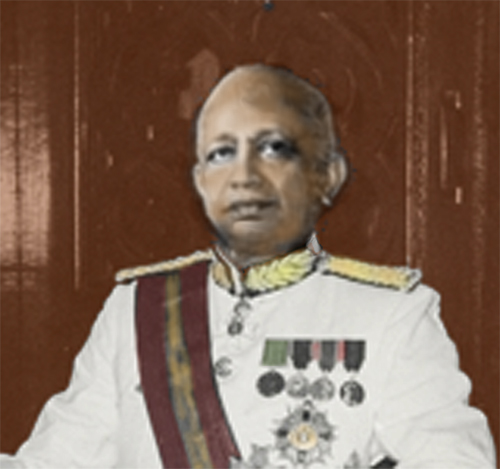
Oliver_Goonetilleke-CT500

Sir Oliver Goonetilleke, Governor General of Ceylon 1954 – 1962

Nine years of researching the background to my novel The Devil Dancers introduced me to some fascinating historical characters. One of the most remarkable was Sir Oliver Goonetilleke, one of the key architects of Ceylon’s Independence and the first Ceylonese to hold the post of Governor-General. This is the first of three articles on one of the most brilliant statesman of his generation.

Every so often, a clutch of papers is released by Britain’s National Archives following a 30 year embargo. While most historians and journalists dream of discovering a juicy scandal – perhaps some questionable relationship between a Cold War politician and a spy – many of these documents appear insignificant and the reasons for keeping them in ‘cold storage’ obscure.

Such might be the conclusion when viewing the few humble sheets of paper that relate to a brief diplomatic exchange in 1977 in which a flurry of memos passed between the British High Commission, Colombo and the Foreign and Commonwealth Office, London.

One report stated starkly: “All convicted under Criminal Justice Commission Act (including Exchange Control Offenders) have reportedly been granted freedom.”

The effect of this terse note was to poke a stick into the Whitehall ant-heap, raising awkward questions of royal protocol and Britain’s diplomatic relations with Sri Lanka.

The subject of all this activity? An 82 year-old ex-patriot, one of the most gifted politicians of his generation, who had been living in London in self-imposed exile for some 17 years.

Humble beginnings

At first glance, the curriculum vitae of Sir Oliver Goonetilleke appears somewhat pedestrian. The only son out of eight children, he came from a respectable middle-class family, his father holding various positions within the Postal Service. Brought up a Christian and educated at Wesley College, Oliver showed promise, yet lacked the vital impetus of wealth and status. His attempts to gain a scholarship to study in England failed and he was overtaken by wealthier contemporaries whose degrees from Oxford or Cambridge virtually guaranteed them a place on the fast-track to positions of influence and political power.

Behind the scenes, Sir Oliver assiduously forged his own path to the top working his way through a series of worthy, but unexciting-sounding posts, such as a sub-accountant at the Colombo Bank, assistant auditor in the government railway service and Colonial Auditor until, finally, he obtained the post of Financial Secretary of Ceylon.

Accountants rarely transform into super heroes. But Sir Oliver broke the mould. A good head for figures was just one of his many talents. He was also a consummate negotiator and political tactician who not only oversaw the safe transition of his country to independent status but who managed, on at least one occasion, to prevent the early onset of the ruinous civil war to which it finally succumbed.

He acquired many powerful friends who included fellow exile and former Prime Minister Sir John Kotelawala. Their first meeting set the tone of their future relationship. Sir Oliver had returned to Wesley College as a teacher and was refereeing a soccer match with Royal College whose team captain was Kotelawala. Sir Oliver recounted how “not long after the match started, the rival captains forgot soccer and in the course of play started to rush at each other like two warring bull elephants.” Taking swift and decisive action, Sir Oliver sent both captains off the pitch.

On a subsequent occasion, his skills of diplomacy once more came into play when the hot-tempered Kotelawala, now honorary Secretary of the Orient Club, settled a dispute with his fists.

Heading off a move by outraged members to eject Kotelawala, Sir Oliver suggested he resign his post and remain as an ordinary member; a tactic that proved agreeable to all sides, ensuring Kotelawala’s continued membership and his future patronage of the Club. There was also a benefit for Sir Oliver who “consented to fill” the post from which he had persuaded his friend to resign.

The feisty Kotelawala was just one of a growing circle of powerful friends that Sir Oliver gathered around him. Others included D.S. Senanayake who was to become the first Prime Minister of independent Ceylon and Lord Soulbury who lent his name to the new Constitution implemented in 1946.

Despite the lack of a glamourous public profile, Sir Oliver’s brilliance as an administrator brought him to the attention of the British during World War II when Ceylon was in imminent danger of attack from Japan. He was asked to lead the Civil Defence Department, an appointment that marked a significant departure from the norm.

According to Dr E.F.C. Ludowyk: “The choice of the quickest-witted Ceylonese of his generation for a position which would normally have gone to a top-ranking white bureaucrat showed how far things had changed from 1915 and even from 1931.”

Sir Oliver set about this new task with his usual energy and enthusiasm, drawing up plans for the construction of 60-foot wide fire-gaps in Colombo which necessitated the bull-dozing of many buildings and the relocation of their occupants.

However, he was to reflect bitterly on the tardiness of the compensation paid for these acts of destruction.

“My hope then was that after the war a new Colombo would arise … but looking at those neglected fire-gaps which have never been repaired, I cannot help but think that very often small nations who join their more powerful allies in a total war-effort are left to fend for themselves and, as in the case of Ceylon, do not get a farthing of reparations.”

Words which could be applied to similar arrangements elsewhere in the 21st century!

In fact, Sir Oliver’s role in Civil Defence had unexpected advantages when members of the Soulbury Commission visited Ceylon in 1944. Negotiations for the country’s independence had not progressed as quickly – or as far – as the Ceylonese had wished. However, instead of confrontation, Sir Oliver launched a charm offensive, using the civil-defence organisation to transport the Commission members around the island and ensure they had a memorable trip.

Throughout these critical negotiations, Sir Oliver employed his diplomatic skills to good effect, smoothing out disagreements and heading off destructive confrontation. He was not only a skilled negotiator, but appears to have had an uncanny knack for recognising people he could trust. One such was Lord Soulbury with whom he developed a warm friendship and who he judged, within minutes of their first meeting, to be a man who would “be fair and honourable in all his decisions.”

Sir Oliver’s partnership with D.S. Senanayake was another key element in the smooth transition to Independence. When Senanayake, frustrated by the shortcomings of the Soulbury Commission, threatened to push ahead without them regardless of the consequences, it was Sir Oliver who interceded, advising moderation.

The result of this hard work, based on goodwill and moderation, was a triumph for Senanayake in the State Council. After a speech in which he urged representatives not to “refuse bread merely because it is not cake”, the British scheme was passed by 51 to 3.

Observers, such as Sir Ivor Jennings, were in no doubt about the extraordinary achievement of the Senanayake-Goonetilleke partnership. Without them, he believed, Ceylon would have remained a Crown Colony. If so, who knows what it might otherwise have had to endure before gaining Independence?

This article was first published in the Colombo Telegraph on 4 December 2014

Next: Part 2 – From Dawn to Dusk


Related Items:

Kent’s Illustrious Exiles: Sir John Kotelawala

An article on Sir Oliver’s friend and former Prime Minister Sir John Kotelawala. This article, which appeared in the Colombo Telegraph, can also be found in the archive section of this blog under June 2014.

A Tangled Web: the Abbot, the widow, the Assassin and the Prime Minister

Read about the conspiracy that led to one of the most shocking political assassinations of the 20th century. Click here
Posted in Ceylon, Exiles, History, Independence, Sri Lanka, Uncategorized | Tagged , , , , , | Leave a comment

Richard III’s mysterious son

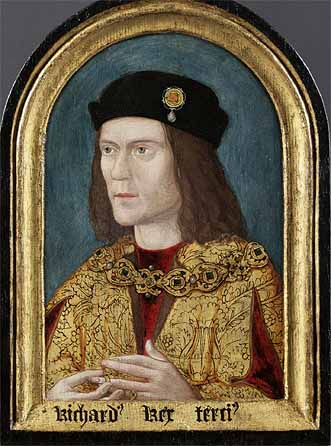
Richard III: earliest surviving portrait

Richard III: earliest surviving portrait

The discovery of King Richard III’s remains in a Leicester car-park has had many repercussions. Most recently, DNA tests have revealed ‘false paternity’ on Richard’s male side. This is explained by an act of infidelity by one of Richard’s ancestors. However, the question of paternity also raises questions with regard to Richard’s own children. One of the most intriguing of these relates to Richard Plantagenet – also known as Richard of Eastwell – the man reputed to be the king’s illegitimate son.

While the parish records of Eastwell in Kent note that Richard Plantagenet was buried on 22nd December in 1550, the first written account of Richard’s story surfaced nearly two hundred years later. This fascinating narrative appears in a letter written by a local clergyman, Dr Thomas Brett, in 1733.

Dr Brett recalls a visit to Eastwell House in 1720. He found the owner, the earl of Winchelsea, ‘sitting with the register book of the parish of Eastwell lying before him.’ Apparently, the earl had been examining the book for information relating to his own family and had discovered ‘a curiosity’: the entry relating to Richard Plantagenet’s burial.

Excited by this discovery, Dr Brett noted the exact words in his almanac. But even better was to come. The earl recounted a story that had been passed down in his family.

When the great manor of Eastwell Place was being constructed in the 16th century, its owner Sir Thomas Moyle visited the site to check on the building’s progress. His curiosity was aroused by the chief bricklayer who, whenever he took a break, would leave the other men and a find a quiet spot where he settled down to read. (Highly unusual behaviour for any manual labourer in this period.)

Creeping up behind the bricklayer, Sir Thomas snatched the book from his hand and examined it. The book was in Latin. An even greater surprise! Sir Thomas questioned the man, asking where he had acquired his learning.

The man said that, as Sir Thomas had been a good master to him, he would entrust him with a secret that he had not disclosed to anyone before.

As a boy, the bricklayer had not known his parents but been raised by a Latin schoolmaster. However, a gentleman – who made it clear that he was not a relation – visited the boy every quarter to pay for his schooling and check on his welfare.

When the boy was about 15, the man took him to a ‘fine, great house’ where he was introduced to a man wearing a star and garter. The man spoke to him kindly and gave him some money before the ‘gentleman’ escorted him back to school.

At a later date, the gentleman returned with ‘a horse and proper accoutrements’ and took the boy to Bosworth Field in Leicestershire. There, in a tent, he met King Richard III who told the boy that he was his son.

“Tomorrow, I must fight for my crown,” said the King. “If I lose that, I will lose my life too.”

The King told the boy to watch the battle from a safe place and, if he won, King Richard would acknowledge the boy as his son. However, if he lost, he warned the boy “to take care to let nobody know that I am your father; for no mercy will be shewed to anyone so related to me.”

King Richard was killed the next day and his naked body, slung over a horse, was paraded through Leicester.

His son fled to London where he sold his horse and fine clothes and apprenticed himself to a bricklayer ‘the better to conceal himself from all suspicion of being son to the king.”

However, he never lost his love of reading and having ‘no delight in the conversation of those he was obliged to work with’, he spent his spare time ‘in reading by himself’.

Deeply moved by this account, Sir Thomas Moyle offered to give the old man ‘the running of my kitchen as long as you shall live.” However, this did not appeal to the solitary Richard who requested permission to build himself a one-room house in a field. Sir Thomas agreed and Richard Plantagenet lived there quietly until he died.

Additional Information

The parish of Eastwell is located a few miles north-east of Ashford. Now the site of a 4-star hotel, the manor has a long tradition of aristocratic connections. It was originally owned by Earl Godwin who fell with King Harold at the Battle of Hastings in 1066. William the Conqueror then gave the property to his supporter, the Norman baron Eustace of Boulogne. In more recent times, Eastwell Park was the home of Queen Victoria’s son, the Duke of Edinburgh. His daughter, Princess Marie, who later became Queen of Romania was born there in 1875. She wrote of “beautiful Eastwell with its great gray house, its magnificent park, with its herds of deer and picturesque Highland cattle, its lake, its woods, its garden with the old cedar tree which was our fairy mansion.”

The house was demolished in 1926 and subsequently re-built in a Tudor style.

SatNav co-ordinates for St Mary’s Church, Eastwell: Latitude/Longitude: 51.1900, 0.8745

‘Looking for Richard’ was the title of a 1996 film directed by Al Pacino which considered Shakespeare’s relevance to the modern world with reference to his play Richard III.

BBC news item re Richard’s DNA and ‘false paternity’

N.B. An extended version of this article first appeared in Kent Life magazine. It has been reproduced with kind permission of the editor Sarah Sturt.

Posted in Al Pacino, History, Uncategorized | Tagged , , , , , , , , , | Leave a comment

10 Tips for Short Story Competitions from a Judge

As a writer I was unsure what to expect when I was first invited to judge a prose competition. My first thought was to write myself a set of guidelines which would act as a life-raft if I felt overwhelmed. Reading them in hindsight, they seem a little obvious. Yet some of the advice I gave myself still holds good and, supplemented by experience, forms the basis of the following advice for writers intending to enter short story competitions.

  1. Read the guidelines thoroughly. Don’t start writing until you have understood what is required of you. Have you been asked to write to a theme or, perhaps, respond to a work of art? It’s easy to get carried away with your own ideas but you can waste a lot of time by not giving your subject sufficient thought or planning at the outset. It’s much more difficult – if not impossible – to try and squeeze your work into a pre-set mould after it is written. The story will suffer and you will become demoralised.
  2. Be sensible. If the word limit is 3,000, then you can bet that is what the judges want. Don’t be tempted to try something radical; for instance, a short piece of 450 words. Judges need to compare like with like. By not using the full word count, you are altering the goalposts. Very short pieces avoid the complexity of maintaining a story’s pace. This will put you at an unfair advantage compared to other entrants who have struggled to write a full-length story. If your work is good, you may make it to the shortlist but it is unlikely that you will win.
  3. Prepare and research. Original ideas will make your story stand out from the crowd. Think like a journalist and try to get a unique angle on the story that everyone else is covering. Read around the subject, listen to music, look at pictures and photographs to get some inspiration. Think like a method actor and immerse yourself in the subject. Then give yourself some thinking space. Don’t start writing immediately. Just make notes of ideas and themes and work them out in your head before you start to write.
  4. Sequencing. A logical progression of thought is essential to any piece of writing. Without it, you will quickly lose the reader’s interests. The standard plot format of ‘beginning, middle, end’ is difficult to beat. It lends structure and will help you to track the progress of your story. Contemplative, lyrical prose can also be a winner but it is more difficult to write as it tends to be less structured. Only embark on this looser form if you are confident that you can make it work.
  5. Scenes. A series of short scenes separated by blank lines can really help to give a story pace. They enable the writer to switch from one place – or time – to another with greater ease and fewer tedious explanatory paragraphs. Scenes are a ‘fix’ for long, rambling chunks of prose and great for action stories. In fact, they can help to leaven most forms of short story. Just don’t overdo the number of scenes. Too many can be counter-productive.
  6. Character development. The same rules apply to both novels and short stories. Avoid laborious explanations of your characters’ psyche. Rather, drop hints about their character traits through dialogue, their mannerisms and the way they interact with other characters. Remember, no-one in real life comes equipped with a CV unless it is for a job interview. You have to work out real people for yourself. The same applies to fictional characters.
  7. Descriptive passages. While it is important to set the scene, you will probably need less text than you imagine. A sentence or two is usually sufficient. Don’t waste valuable word-count on long descriptive passages. Avoid excessive use of adjectives. Keeping your text crisp and tight will maintain the pace of your story.
  8. Don’t be over-ambitious. Remember that you are writing a short story, not a novel. A hugely complicated plot with lots of sub-themes will not fit a limited word count. Aim for subtlety rather than grandeur; the intimacy of a Flemish interior rather than a landscape, water-colours rather than oils. There are various devices that can add texture and shading: humour, irony, pathos, a cliff-hanger, an unexpected twist in the tail. Choose wisely and remember, due to the concentrated nature of short stories, the spotlight will focus relentlessly on the quality and style of your writing.
  9. Mid-life crisis. Does the middle of your story arc or sag? The mid-way point is a notorious black spot where writers often get lost and lose the plot. It is essential to stay on course, keep the structure tight and maintain pace.
  10. Edit, edit, edit. This is what separates the winners from the also-rans. Read your story aloud before editing. This will highlight lots of glitches such as plot faults, bad sequencing and duplication. Just changing the order of paragraphs or sentences will often help the flow. Ruthlessly check grammar and spelling. I have read stories that had typos in the first line!

Now all you have to do is find a competition and start writing. Good luck!

Biography

I am a novelist, historian and former lawyer. I have written two books: The Devil Dancers, a historical novel set in 1950s Ceylon and Barley Bread and Cheese, a short story collection inspired by Rochester Cathedral. I am currently editing my third book, a historical novel which explores an unusual angle of British history in World War II.


Follow me on Twitter: @T_Thurai

Posted in Editing, Editing tips, Fiction, SaveAs Writers, Short stories, Writing competitions, Writing Tips | Tagged , , , , , , , , , | 4 Comments

Homeward Bound: The Answer to a Riddle

A riddle resolved

A riddle resolved

Yesterday I posted ‘Homeward Bound’, a riddle in short story form. Here, as promised, is the answer.

The narrator of my story – and the answer to my riddle – is a very special book: the Textus Roffensis. Written in the Benedictine Priory of St Andrew which was adjacent to Rochester Cathedral, the Textus Roffensis dates from the 12th century.

Apart from a few later additions, this unique manuscript was the work of a single scribe. It consists of 235 leaves and is written on vellum, that is, sheets of specially-prepared calf-skin.

The manuscript not only records a number of charters relating to Cathedral lands (very useful for proving ownership in cases of dispute) but, more importantly, it is thought to provide one of the most complete records of Anglo-Saxon law. These include the Laws of King Aethelbert dating from 604 AD as well as the laws of other Kentish kings from the 7th and 8th centuries.

Among the ancient laws recorded by the Textus Roffensis are those grouped together under the title Iudicia Dei or Judgements of God. These refer to the ordeals by which the guilt or innocence of those accused of crime was put to the test. Most commonly these ordeals consisted of holding red-hot iron, immersing one’s hand in boiling water or of the individual being totally immersed in water.

However, there is one ordeal that has perplexed historians for centuries. It is that of barley bread and cheese: an ordeal known as corsned in Old English. How this ordeal was supposed to have worked and who was subjected to it is still a matter of conjecture. While some commentators maintain that it was reserved for members of the clergy, there is also a famous example of it being applied to a layman.

Godwin, earl of Kent, the father of King Harold, was accused of murdering his own brother. He elected to take the ordeal of barley bread and cheese to prove his innocence. Before submitting himself to the ordeal, he was supposed to have cried: “May this bread choke me if I am guilty!”

A rash challenge for Godwin choked and died.

This unusual ordeal provided both the title for a collection of short stories which includes ‘Homeward Bound’ and also the inspiration for an eponymous story in which a young historian finds a novel application for an old test of truth.

When reading a history of the Textus Roffensis, I was struck by the book’s extraordinary adventures. It was lent to various scholars and travelled up to London on a number of occasions for re-binding and copying. It became the subject of at least two custody disputes, one of which led to a legal battle in the Court of Chancery.

To add to the excitement, the book was accidentally ducked in a river (either the Thames or the Medway). Its survival on that occasion was thought to be largely due to brass clasps which bound its pages so tightly that water could not penetrate beyond the outer margins.

For many years, this wonderful old book was kept at Medway Archives at Strood. It was, undoubtedly, a safe environment; but, from the old book’s point of view, it must have been somewhat dull, devoid of  adventure, abduction and life-threatening episodes.

Detail of Rochester Cathedral (foreground) with Rochester Castle (background)

Detail of Rochester Cathedral (foreground) with Rochester Castle (background)

When writing this story, it seemed appropriate to compare the Textus Roffensis to an old person dreaming of the past and a much-loved, former home: in this case, Rochester Cathedral.

Little did I know that a new chapter of the Textus’s extraordinary history was about to be written. Last year, my short story collection Barley Bread and Cheese was launched at Rochester Cathedral with ‘Homeward Bound’ as one of the readings.

It was an unforgettable evening but the high spot for me was the announcement that next year, the Textus Roffensis will be returning to its original home at Rochester Cathedral. 2015 will be a particularly appropriate date for that event as the Textus contains a copy of the Coronation Charter of Henry I, a forerunner of Magna Carta which celebrates its 800th anniversary next year.

But there is also something to celebrate this year.

Manchester University has announced the completion of a project to convert this ancient tome to a thoroughly modern format. Scholars and bibliophiles around the world will now be able to study a digital version of the document at their desks.

Not quite as romantic as vellum perhaps, but far more accessible to lovers of history and the written word.

At last this venerable old book is waking from its slumbers and shaking the dust off its pages, ready to greet a vastly increased audience and win new admirers.

Additional notes


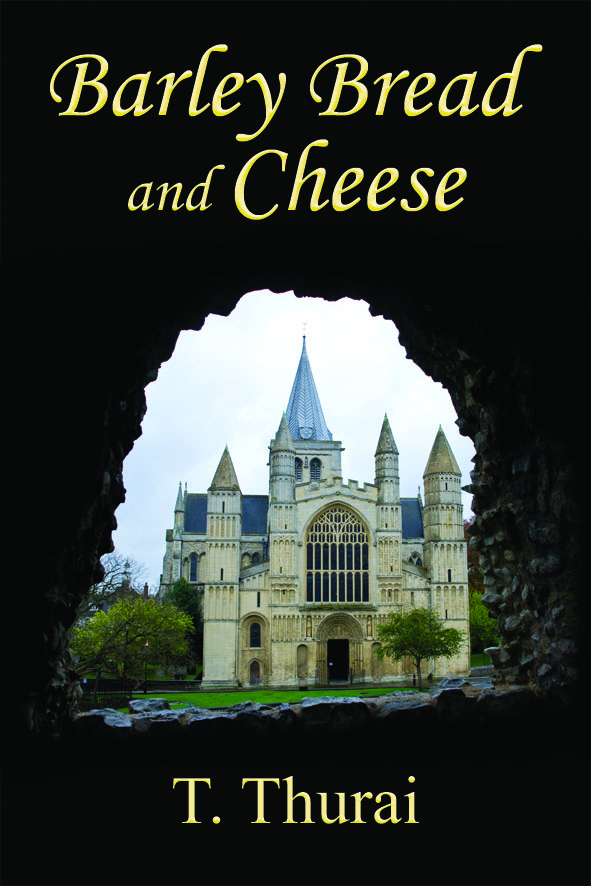
Rochester Cathedral features on the front cover of Barley Bread and Cheese

Rochester Cathedral features on the front cover of Barley Bread and Cheese

The story ‘Homeward Bound’ appears in a slightly different version in my book Barley Bread and Cheese. It is one of a selection of short stories inspired by Rochester Cathedral, its history and works of art.

Barley Bread and Cheese is available in both hardback and ebook format from Amazon. The Kindle version is available for free from Kindle Unlimited. For more information, please click here

Hardback versions of the book are also available from Rochester Cathedral bookshop and the Medway Visitor Information Centre.

Posted in Cathedrals, Fiction, History, Magical Realism, Myth, Riddles, Rochester, Short stories | Tagged , , , , , , , , , , , , , , , , , , , , , , , , , , | Leave a comment

Homeward Bound

Has this riddle got you chasing your tail?

Has this riddle got you chasing your tail?

I am sleepy now. It’s quiet in here. They still treat me with reverence and speak in hushed voices; just as they did in my old home. But there, I had more visitors. Now, I may not see anyone for weeks. Just the cleaning lady; a young girl who has music piped into her ears from a machine to drown out the noise of another machine, the Hoover.

These days, it seems that there is no place for silence; at least not the contemplative kind. That silence was filled with thought. It was companionable and could be shared with others. Today’s silence is empty, a badge of neglect; deserted streets, derelict lives. No-one wants to share that. It is something to fear, to be fought with noise: radio, television, the telephone. People drown their own thoughts in a wave of sound, creating the very thing they dread: loneliness.

Hush! I can see a light under the door. Voices. I have a visitor. It’s the doctor; a thin man in his fifties. His head is covered with wisps of rusty hair, the same colour as his corduroy jacket and the frames of his glasses. Apart from these muted highlights, he is devoid of colour. Like me he is invisible, filled with knowledge for which no-one has any use. But I like him. He has gentle hands. I tingle when he touches me, for he reminds me of another: the first man to caress my skin, the one who made me what I am.

For I have a story to tell. It is an interesting one, full of intrigue and adventure.

*

He tickled me with a bird’s feather, that first one. He scratched me too. But it was all in the cause of beauty: at least, as far as I was concerned. I was very fussy about my appearance. I would not countenance a blemish of any kind. In those days, I had the vanity of a young girl. Every mark, tattooed onto my skin had to be perfect. So I lay very still while work was in progress.

We spent many hours together; alone, late into the night, keeping our trysts by the light of a candle. A love affair, of sorts, that lasted many years. I was his work of art, that’s what he called me. He even told me once, that I was the love of his life. And him, a man forbidden to marry!

While my skin remained pure and seamless, his began to wrinkle. First, little cracks around the eyes, then the mouth. And the colour in his cheeks, once so fresh and rosy, began to fade. Our time was passing. And I grieved. But he poured his life into me. As he grew thin, I grew fat. As his energy waned, I became stronger, my body girded with leather and metal.

And then, one day, he did not return and another took up his work. It was never the same after that. No-one had his devotion. Or his touch. My first and only love.

*

I was a beauty with pride of place in the Great House, shown off to all, including kings. I alone had the power to defy royal pretenders. The possessor of many lands, I defeated their greedy schemes.

My word was law and I taught them the meaning of justice.

Criminals were brought before me for judgement and I decided the means of their trial. Water, iron or something a little more irregular: a diet of barley bread and cheese, something so subtle that even my current doctor cannot grasp it.

Yet that humble ordeal felled a mighty nobleman. Earl Godwin, father of King Harold, was accused of murder. He chose the ordeal of barley bread and cheese and scoffed at it. Yet scoffing was his downfall. He ate one mouthful and dropped down dead.

*

All men wished to possess me. I visited London on several occasions where I was measured for new clothes and my likeness recorded for posterity. I was the talk of the town, examined, admired and, although passed from hand to hand, always treated with respect. Except on one occasion.

In London, I was taken to visit a friend who was to escort me home. However, my friend was absent from his lodgings, so I was left to await his return. The landlady said she would look after me. Unscrupulous jade! No sooner were we alone, than she forced me up the stairs and began to pound on the door of another lodger.

Dr Thomas Leonard was a physician from Canterbury. The sight of me took his breath away. I shuddered as he pawed me with his greasy fingers. My beautiful skin! The doctor said that I was a rare specimen and struck a bargain with the landlady for 5 shillings. I was bought and sold like a slave-girl in a market. It was a dark chapter in my history.

After that, men quarrelled over me like dogs over a bone. I was taken to the Court in Chancery where lawyers in powdered wigs argued in a language that I could not understand. For days, they strutted about in a foul-smelling, airless room: presenting arguments, interrogating witnesses; crows who believed themselves peacocks displaying to an empty gallery.

This long-winded, meandering justice was new to me. It did not have the immediacy of the ordeal. No blood-curdling test for truth or lies. Rather the combatants wore each other down by talking. On and on they went. In a way, I suppose it was a kind of ordeal. The judge certainly thought so. Constantly yawning and rubbing his eyes, he had perfected the art of napping while appearing to nod sagely. But, occasionally, his snoring betrayed him!

At last, justice triumphed and I was taken home. And then came the final insult.

On one of my last outings, they dropped me in the river! Do not ask how it happened. I cannot remember. But as I sank through the murky depths, I thought that I had breathed my last. In the filthy mire of the Thames, I felt cold water lapping around me. Barges, cutters, ferries and row-boats: the hulls of boats passed overhead while small fish began to nibble at my skin.

It took them hours to rescue me. When they finally hauled me to safety, they wondered how I had survived. It was all down to my belt. Like any tight-corseted woman of that age, I had been so constrained about the waist that hardly any water had seeped in. All I had to show for my ordeal was a light, crystalline powder which gave my skin a delicate glow.

Once again, I was ahead of my time. It would take them over two hundred years to perfect anything like it for other women. And they would call it make-up and talk about it as if it was something new. Honestly!

But that’s all in the past.

As I said, I don’t have many visitors now. I’m in a home for the elderly. Like them, I’ve lost my voice. Few understand what I say. Only a few enthusiastic doctors who come to examine me. They’re especially interested in my tattoos. Carolingian minuscule, they call it. They say it displays unique characteristics. And they still marvel at my speech: old English with a touch of Jutish. Rather rare, I’m told.

I spend most of my days sleeping. And I dream of going home. To the place where once I lay on a bed of white linen beneath a vaulted ceiling. Perhaps, one day, a new chapter will begin.

Who am I?

Additional notes

This is a slightly altered version of one of the short stories from my book ‘Barley Bread and Cheese’ which was launched last year at Rochester Cathedral. The book is available in both hardback and ebook format from Amazon. The Kindle version is currently free via Kindle Unlimited. For more information, please click here

For information about my novel ‘The Devil Dancers’, please see my website

Posted in Cathedrals, Fiction, History, Riddles, Short stories | Tagged , , , , , , , , , | Leave a comment

Trafalgar and the Passage of Time

Tomb of Horatio Nelson by Thomas H. Shepherd

Tomb of Horatio Nelson by Thomas H. Shepherd

In an age of instant communication, anyone researching the Battle of Trafalgar will immediately be struck by the extraordinary slowness with which the British fleet engaged its enemy, the long delay before these events were reported in British newspapers and the even longer period before Nelson’s body reached its final resting place. The following account covers some of the less well-known facts relating to the Battle and its consequences for Nelson’s mistress and daughter.

At 5.50 a.m. on 21st October 1805, the British got their first sighting of the combined French and Spanish fleet off Cape Trafalgar in southern Spain. Just after 6 a.m., Nelson’s ship the Victory gave the signal to prepare for an attack.

However, weather conditions slowed the British fleet’s advance and it was five and a half hours later – at 11.35 a.m. – when the Victory finally sent the famous signal “England expects that every man will do his duty”. (Nelson had originally wanted to send a slightly different message using the word ‘confides’ rather than ‘expects’ but was constrained by the rules laid out in the official navy manual, Popham’s signal book).

The first shots were fired by the enemy fleet at 11.50 a.m. Retaliatory shots from the British side were fired by the Royal Sovereign at mid-day.

Robert Sands, a powder-boy on HMS Temeraire, left a unique account of an ordinary fighting man’s experience of the Battle.

The Temeraire was positioned close to the Victory and, as they engaged the enemy, Nelson hailed the Temeraire ordering it to move aside so that he could forge ahead. Sands recalled that Nelson was “on the foredeck with his full uniform on” so that he was clearly visible not only to his own men but also to the enemy.

Fighting was at close quarters with the Victory ramming the port bow of the French ship Redoubtable whose crew had been thoroughly trained in the use of muskets by their Captain.

The noise of battle was deafening and visibility was generally low due to the choking smoke of gunfire which forced Sands and other sailors on the Temeraire up on deck due to the suffocating atmosphere below.

An explosion in the Temeraire’s rear magazine resulted in several men being burnt to death and Sands having to resort to the magazine at the fore of the ship.

Meanwhile, just twenty minutes into the engagement, Nelson was shot by an enemy musketeer positioned 50 feet above him in the mizzen top of the Redoubtable. Nelson and Hardy had been pacing the foredeck watching of the Victory watching the action and Hardy, unaware that Nelson had been hit, continued walking before he realised what had happened.

Mortally wounded, Nelson was carried down to the ship’s cockpit where he was visited during his last hours by his friends and comrades. Certain of his own death, he impressed on them the need to look after his mistress Lady Hamilton and their daughter Horatia. He is said to have died in the arms of the purser Walter Burke who, like Sands and some 99 other veterans of Trafalgar, came from the Medway area in Kent.

At his request, Nelson was not given the traditional sailor’s burial at sea but brought back to England, his remains preserved in a large cask of brandy.

The news of Trafalgar and Nelson’s fate reached England some two weeks after the event. The subsequent arrival of the Victory at Spithead was reported in The Times newspaper on 2nd December.

The Victory then sailed to Sheerness where Nelson’s body was transferred to a private yacht and conveyed to Greenwich where it was laid in a coffin made of wood from the mast of the French flagship L’Orient which Nelson’s forces had defeated in the Battle of the Nile in 1798.

After lying in state, Nelson was given a spectacular funeral attended by royalty. A procession of 10,000 soldiers, 32 admirals and over 100 captains escorted the coffin to St Paul’s Cathedral where it now rests, encased in a black marble sarcophagus originally intended for Cardinal Wolsey.

While the Victory was anchored at Sheerness it became a focus for sightseers, among them the artist Turner who went aboard armed with his sketchbook. The result was his painting ‘The Battle of Trafalgar, as seen from the Mizzen Starboard Shrouds of the Victory’ which replicated the position from which Nelson was shot.

Despite the public outpouring of grief, the nation failed to observe Nelson’s wishes respecting his mistress and daughter. After a spell in a debtor’s prison, Lady Hamilton fled to France with her young daughter Horatia. Nelson’s celebrated mistress died in poverty in Calais in 1815.

Lacking the legitimacy which would have allowed her to inherit from her father, Horatia lived in straitened circumstances, marrying the Reverend Philip Ward and moving with him to the living of St Mildred’s Church in Tenterden, Kent, where they lived for nearly 30 years.

For his part in the Battle of Trafalgar, the Temeraire’s powder-boy Robert Sands received prize money of £1 17s 8d. His gift to us is a detailed eyewitness account of one of the most memorable events in British history.

Sources and Additional Information:

Books and articles:

Trafalgar The Nelson Touch by David Howarth

Turner A Life by James Hamilton

Nelson’s Descendants and St Mildred’s Church – an account by Hugh Ward. Click here

Places to Visit:

Medway Archives for Robert Sands’s account of the Battle of Trafalgar and information on the Victory’s purser, Walter Burke

Chatham Historic Dockyard (where HMS Victory was built)

HMS Victory, Portsmouth

Nelson’s tomb, St Paul’s Cathedral, London

St Mildred’s Church, Tenterden, Kent

Picture attribution: “Tomb of Horatio Nelson” by Thomas H. Shepherd – http://www.nmm.ac.uk/collections/images/560/PU/39/PU3922.jpg. Licensed under Public domain via Wikimedia Commons – http://commons.wikimedia.org/wiki/File:Tomb_of_Horatio_Nelson.jpg#mediaviewer/File:Tomb_of_Horatio_Nelson.jpg


Posted in History | Tagged , , , , , , , , , , , , , , , , , , | Leave a comment

Brideshead Reconsidered

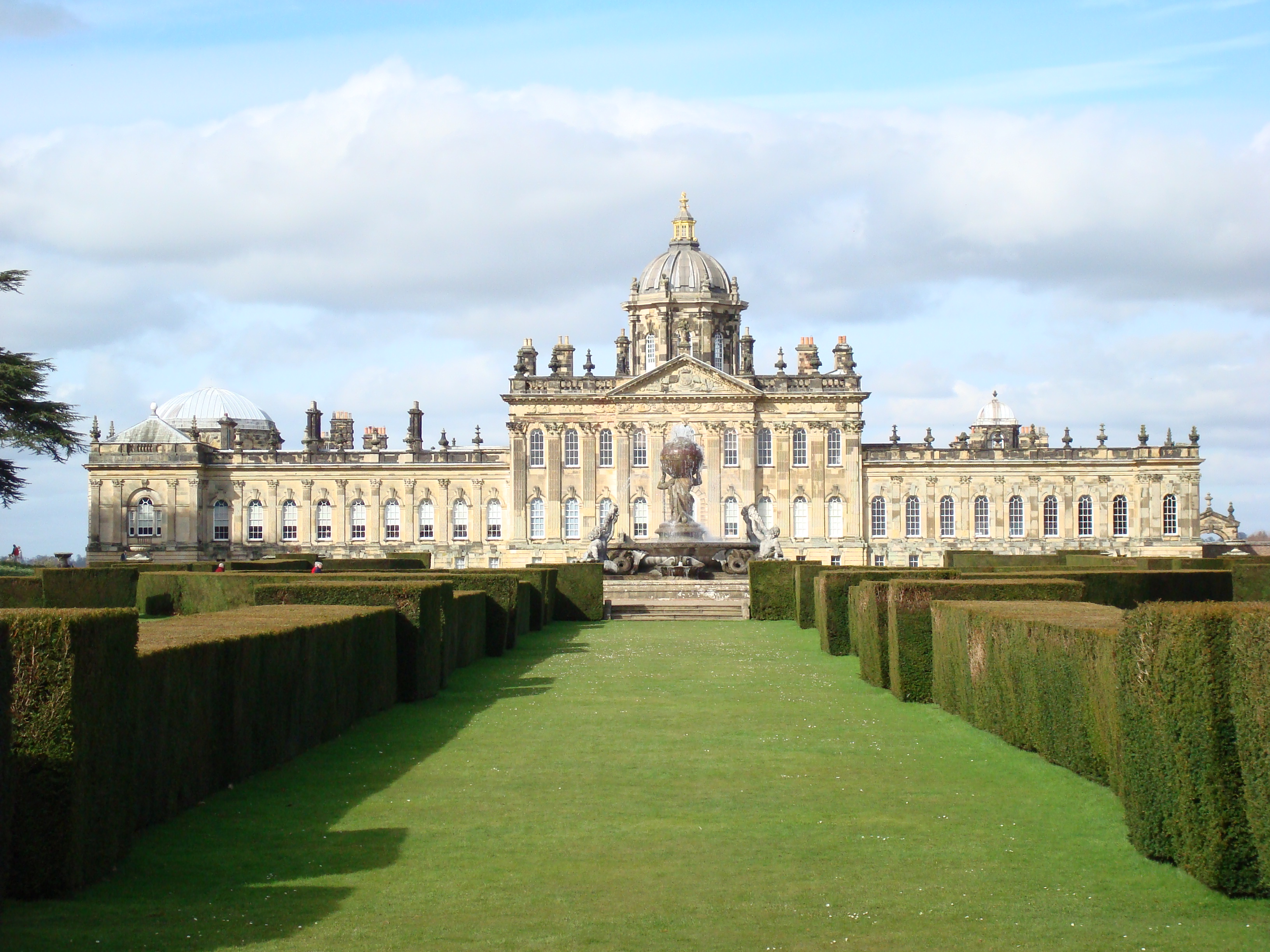
Castle Howard: the setting for the TV series of Brideshead Revisited

Castle Howard: the setting for the TV series of Brideshead Revisited

Reading a book after seeing its eponymous film or TV version is an interesting experience. You may discover hidden depths in the literary parent or, alternatively, realise that a gifted director has employed alchemy to turn base-metal into gold.

Having fallen in love with the 1980s television adaptation of ‘Brideshead Revisited’ and seen the sumptuous – but less memorable – film, I finally got around to reading Evelyn Waugh’s novel this year.

My verdict?

It struck me that this novel consisted of two parts (possibly because I stopped reading it half-way through!) What had charmed me in the TV series – the Sebastian/Charles bromance, the wistful shots of Oxford, the artful nostalgia – disgusted me in the book. I quickly became bored with the effete, self-indulgent, egocentric young men portrayed by Evelyn Waugh.

However, I recently returned to the book, finished it and enjoyed what I read.

Far from being the insipid narrator of the TV version, Charles Ryder emerges as an unpleasant character; a snob, a man who feels no love or responsibility for his children, a gold-digger and someone who insists on forcing his opinions on others at the most inopportune moments. Although an artist, he lacks sensitivity, except when it relates to his own feelings.

While admitting to his own shortcomings, his honesty fails to captivate the reader – at least, this one. Charles is an intelligent, talented man who – even in his own eyes – never rises above the average. Despite his transgressions, he never completely breaks with the society in which he lives, unlike his friend Sebastian.

In many ways, Sebastian is not so much a character as a comment, an observation. He typifies a kind of exquisite human mayfly whose existence depends on a combination of ephemeral qualities: beauty and charm. With no substance to sustain him, only two options remain: death or decay.

My favourite character is Anthony Blanche. Outrageous and outspoken, he is self-deprecating, spiteful, funny and as indestructible as a cockroach.

In some respects, the book’s themes of marriage and Catholicism are outdated and difficult to grasp from a modern perspective. However, they highlight personal and moral dilemmas which reveal different facets of the characters and define their relationships with each other.

Nostalgia is a recurrent theme in the novel: Sebastian’s desire to revisit his childhood; Charles, haunted by memories of Brideshead, not only witnessing the end of a dynasty, but also the swansong of a class and the great houses in which they lived.

I wonder what elements of our modern lives would fit the phrase Et in Arcadia Ego and evoke such elegiac prose?

Is Brideshead worth revisiting?

Absolutely.

A perfect book to read under a tree on a sunny day accompanied by: a glass of Château Peyraguey (Sebastian’s recommendation), strawberries and the chiming of distant bells.

Attributions and Further Information:

Brideshead Revisited by Evelyn Waugh: click here for Amazon

Photograph of Castle Howard: Attribution: “England1 144” by Pwojdacz (talk). Original uploader was Pwojdacz at en.wikipedia – Taken by Pwojdacz. Licensed under Public domain via Wikimedia Commons – http://commons.wikimedia.org/wiki/File:England1_144.jpg#mediaviewer/File:England1_144.jpg

For more information on Castle Howard, click here


Posted in book review, Uncategorized | Tagged , , , , | Leave a comment

Writing Tips 3: Editing

PoppyThis is the most underestimated element of the writer’s art. But it is absolutely necessary. To be a good writer, you must also be a good editor. Train yourself to edit and you will greatly enhance the quality of your work. Here are some tips:

1) Get to the end of your first draft before you begin to edit, otherwise you run the risk of getting tangled up in detail

2) Leave your draft for a while (a couple of weeks, if possible) before re-reading it. By letting your work go ‘cold’, it will become much easier to edit.

3) Read your draft aloud. This is one of the best tests for any piece of writing. It will help you to spot where the pace slackens – and why. It will also highlight errors, discrepancies and duplication. If it doesn’t sound right, then it’s wrong. It’s as simple as that.

4) Before making large cuts or additions to your work, try re-arranging sentences and paragraphs. This can work wonders. When you are writing, your ideas don’t always follow a logical sequence. They often need to be reorganised at this stage.

5) Pencil in cuts/additions to your work and leave it for a day or two. Before finalising any changes, review your work again. You will often find that any required alterations are much simpler and smaller than you initially thought. Sometimes, you may only have to change a few words rather than cutting/adding extra paragraphs.

6) Have you used too many adjectives? These can overburden text and slow the pace. Don’t clutter your writing. Keep it tight and light. Try using well-chosen verbs as an alternative.

7) Use your dictionary and thesaurus. If in doubt, always check that you have used the right word and look for alternatives to prevent duplication.

8) Do use the spell- and grammar-checks on your computer – but don’t rely on them. There is no substitute for the human eye and judgement. Always proof-read your own work several times.

9) When you are happy with your story, find someone whose judgement you trust and let them read it. Be prepared to take constructive criticism. Review your work in the light of their comments. Can it be improved? If so, amend it.  If not, don’t.

10) For competitions, check that your work adheres to the rules, especially regarding subject and word-count. Presentation is also important. Are there any stipulations as to how your manuscript should be set out? Where should you write your name and contact details? Should your manuscript be emailed or sent via the post? Is an entry fee required?

So now you’ve got some guidance for researching, writing and editing. What are you waiting for? Start writing and, above all, enjoy it.

Good luck!


Posted in Editing, Editing tips, Fiction, History, SaveAs Writers, The Great War, World War 1, Writing Competition, Writing Tips, WW1 | 1 Comment

Writing Tips 2: Getting Started

PoppyOnce you have an idea about what you want to write, try to find a shortcut into your chosen subject or theme. Think of it as a portal into the imagination. It can be a picture, music, photographs or written research – anything that will serve as a mental prompt.

When writing about Neleni, a character in my novel The Devil Dancers, I used to wear a particular perfume, the sort of thing that I imagined a woman in the 1950s would wear.

When it came to describing Sri Lankan food, I would open our store-cupboard and take a deep breath, inhaling the smell of all the fragrant spices that are used in that particular cuisine.

Before you start writing, it’s worth considering how you are going to retrace your steps when editing. This is particularly important if, like me, you rely on a lot of historical information to build up the background to your stories. It’s so easy when writing notes to paraphrase from a text-book then unintentionally to transfer that to your manuscript. If you do not leave a trail of references, cross-checking during editing will take much longer.

If you are relying on factual information to create a setting for a story, remind yourself that you are writing fiction, not a text book. You need to convey a feeling and a flavour of your chosen subject, not reams of fact. Remember: your most important resource is your imagination.

Here are some exercises and suggestions to start you off:

1) Describe a scene relating to your chosen subject in one paragraph (no more than 5 sentences). Short descriptive passages inserted into your story at relevant places are far more effective than long chunks of text which can slow down the pace of your narrative.

2) Get to know your characters. Write their CV. Who are they? Where do they come from? Where are they going? How do they interact with their surroundings and the other characters? What are their unique features? What do they think and why? What are their likes/dislikes? Like someone applying for a job, your characters have to convince you that they are worthy of a place in your story.

3) What is the plot? Work out a rough narrative arc, that is, a beginning, middle and end. How will the setting and characters help to give your story momentum and credibility?Don’t rely on pure narrative. Use the characters to tell the story and make them interact through dialogue. Make them tell the story.

4) Don’t worry if you cannot work out every detail in advance. Gaps and inconsistencies can be worked out at a later date. Just get something down and see where it leads you. You’ll be surprised how your story develops as you start writing.

5) Use your senses. Work in subtle details of how something – or someone – looks, smells, sounds. Don’t put all the detail in at once. Weave small elements into your story to give it texture.

6) To hone your skills, why not enter a competition. This will give you a theme and a deadline to guide your writing. Keep an eye open for local competitions run through literary festivals and writing groups. Writing Magazine also carries a lot of information about forthcoming competitions around the UK. You should also check out the Mslexia website and the BBC Writers’ Room.

Next: Writing Tips 3 – Editing

Posted in Fiction, History, Writing competitions, Writing Tips | Tagged , , , | Leave a comment

Writing Tips 1 – Get in the Mood

Poppy

When setting a scene, you need to create a convincing world for your reader. As a writer, you need to be able to see, hear and smell the location. While that is largely a matter of imagination, you can prompt your senses by reading, looking at photographs and visiting places that have an association with your subject.

Here are a few suggestions:

Reading

Read some contemporary writing, perhaps a family diary or more generally known works such as

Siegfried Sassoon’s ‘Memoirs of an Infantry Officer’ or Wilfred Owen’s iconic poem ‘Dulce et Decorum est’.

Museums and Online Sites

The British Library: find a fascinating essay on Owen’s famous poem by Dr Santanu Das together with a wealth of other information on the Great War here

Imperial War Museum (London): the Museum re-opened after refurbishment on 19 July and features the new First World War Galleries. There are a number of other IWM sites, including IWM North in Manchester that has a special exhibition entitled ‘From Street To Trench: A War That Shaped A Region’.

Browse the IWM website for fascinating items such as the British shaving brush with concealed information – a perfect prompt for a spy story!

Read about The Lusitania Camisole and the remarkable story of Margaret Gwyer’s shipwreck survival following a U-boat attack in 1915.

National Archives: this page provides links to various categories of relevant information, including: RAF officers, Army nurses, Merchant Seamen and Prisoners of War.

Local Museums and Libraries

There is almost certainly an exhibition near you. There may also be a war memorial or cenotaph in your town. Local churches are often overlooked but can provide valuable information. Memorial plaques can supply a surprising amount of information.

Use your local library card to access online material such as the Oxford Dictionary of National Biography (ODNB) and contemporary newspaper reports.

War Artists

Seek out the works of Stanley Spencer. An exhibition is currently running until November at the Stanley Spencer Gallery in Cookham, Berkshire entitled: ‘Paradise Regained. Spencer in the Aftermath of the First World War’. http://stanleyspencer.org.uk/

There is also a display of War Artists at Sea at the Royal Museums Greenwich

Music and Culture

Podcasts featuring highlights from BBC Radio 3 programmes relating to the art, culture and music of WW1 can be found on this site

Film

For film related to WW1, including examples from the British Pathé Archive, click here

Note: These writing tips have been prepared to accompany the SaveAs Writers’ competition “The Bigger Picture – Reflections on the Great War”. Entries are invited of poetry or prose written in response to any work of art (e.g. a painting, song, poem, film or soundtrack to a film) connected with WW1. The closing date is 23rd August. For more information, click here

NEXT: Writing Tips 2 – Start to Write

Posted in Fiction, History | Tagged , , , , | Leave a comment